


$75k Profit Swing with Spillover Commerce
without wasteful ad spend, or cutting prices.
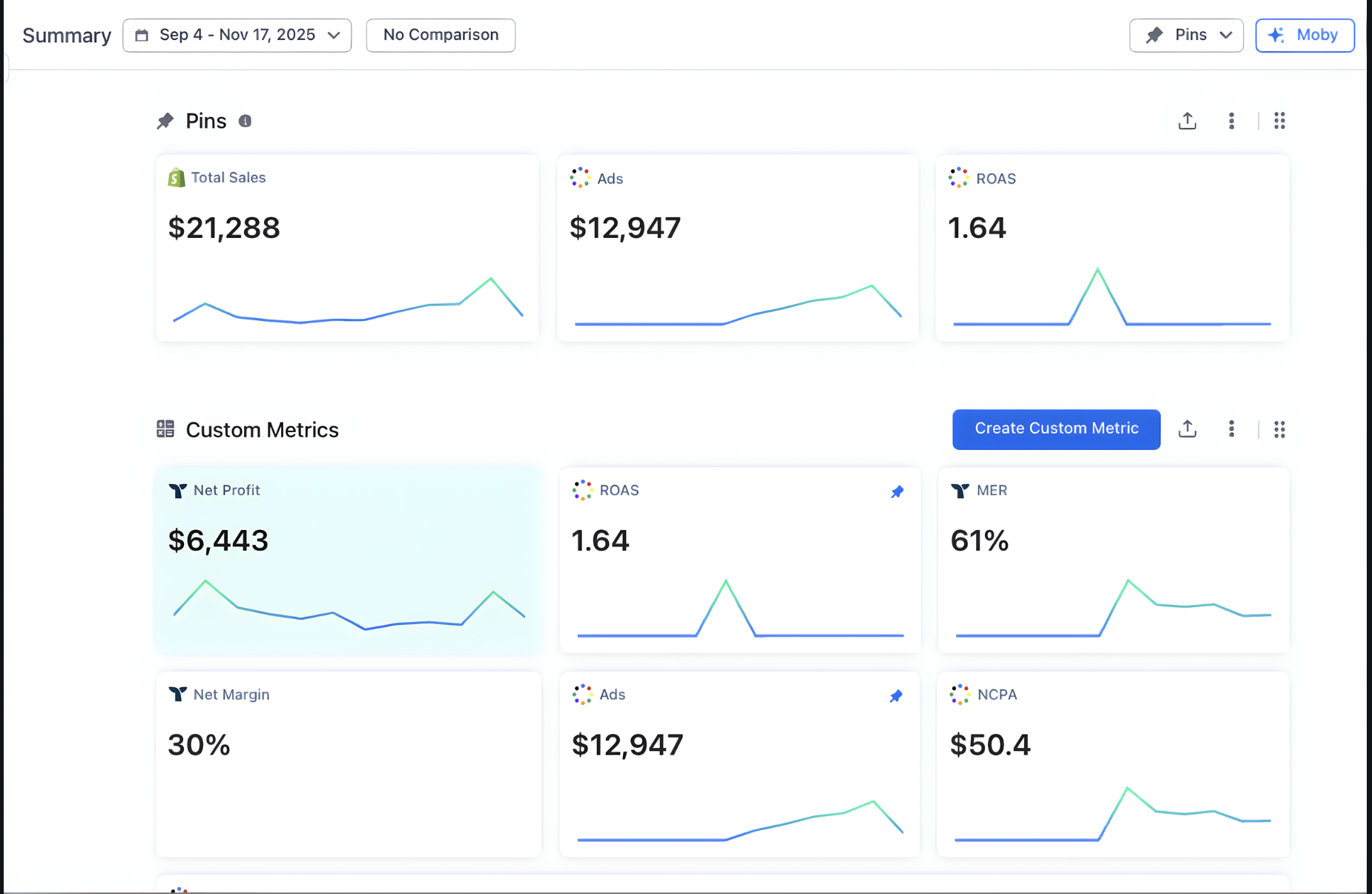
Here are the numbers:
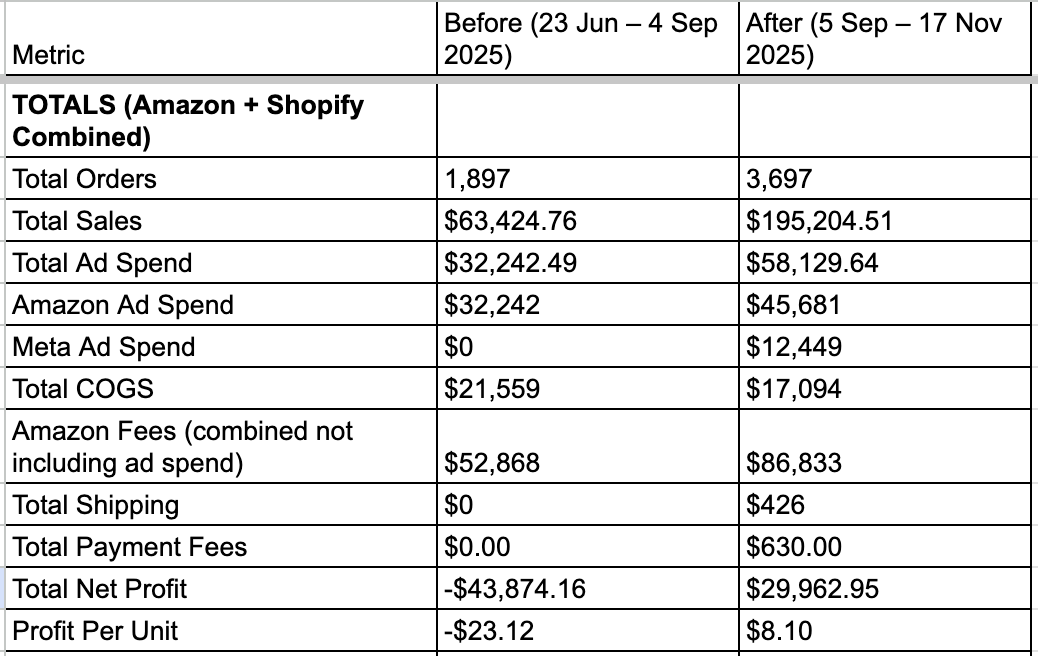

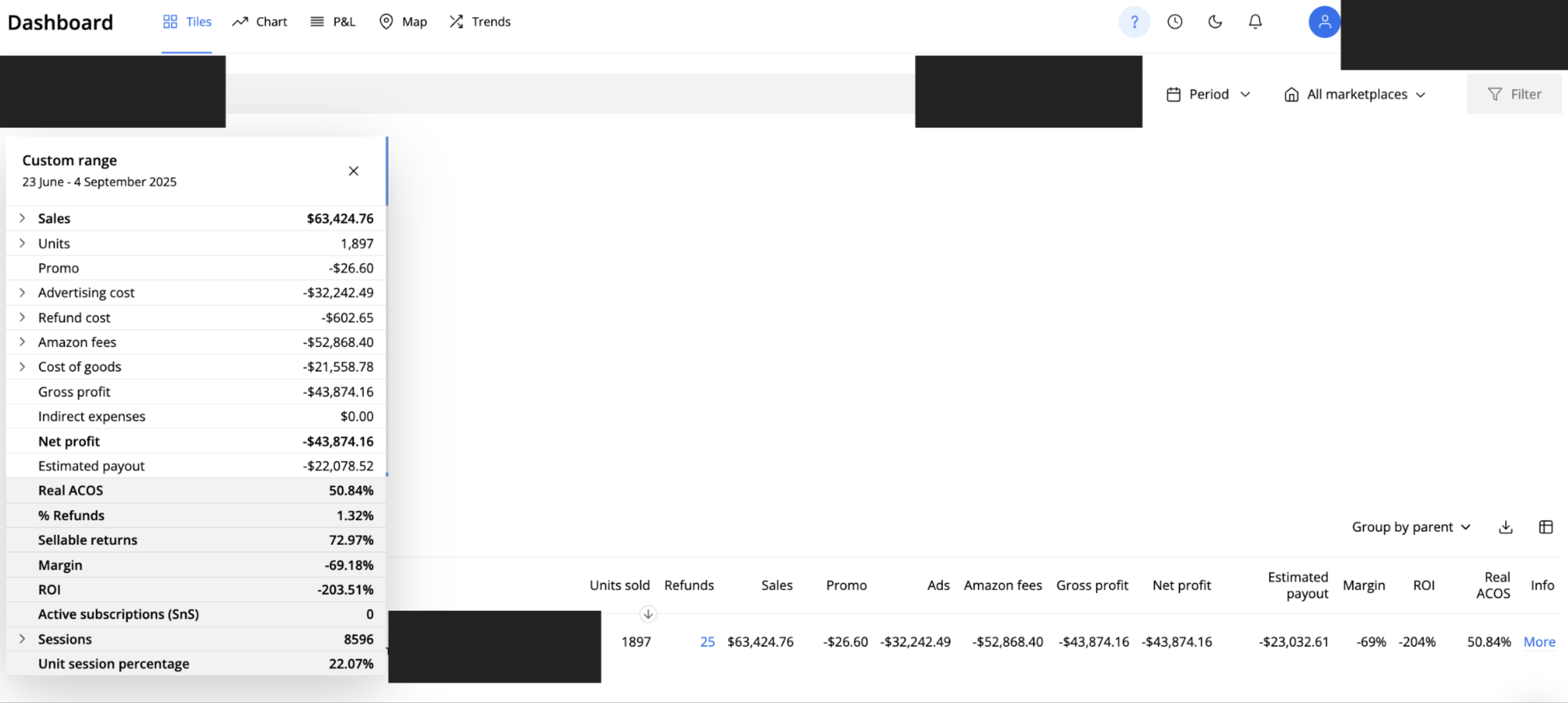
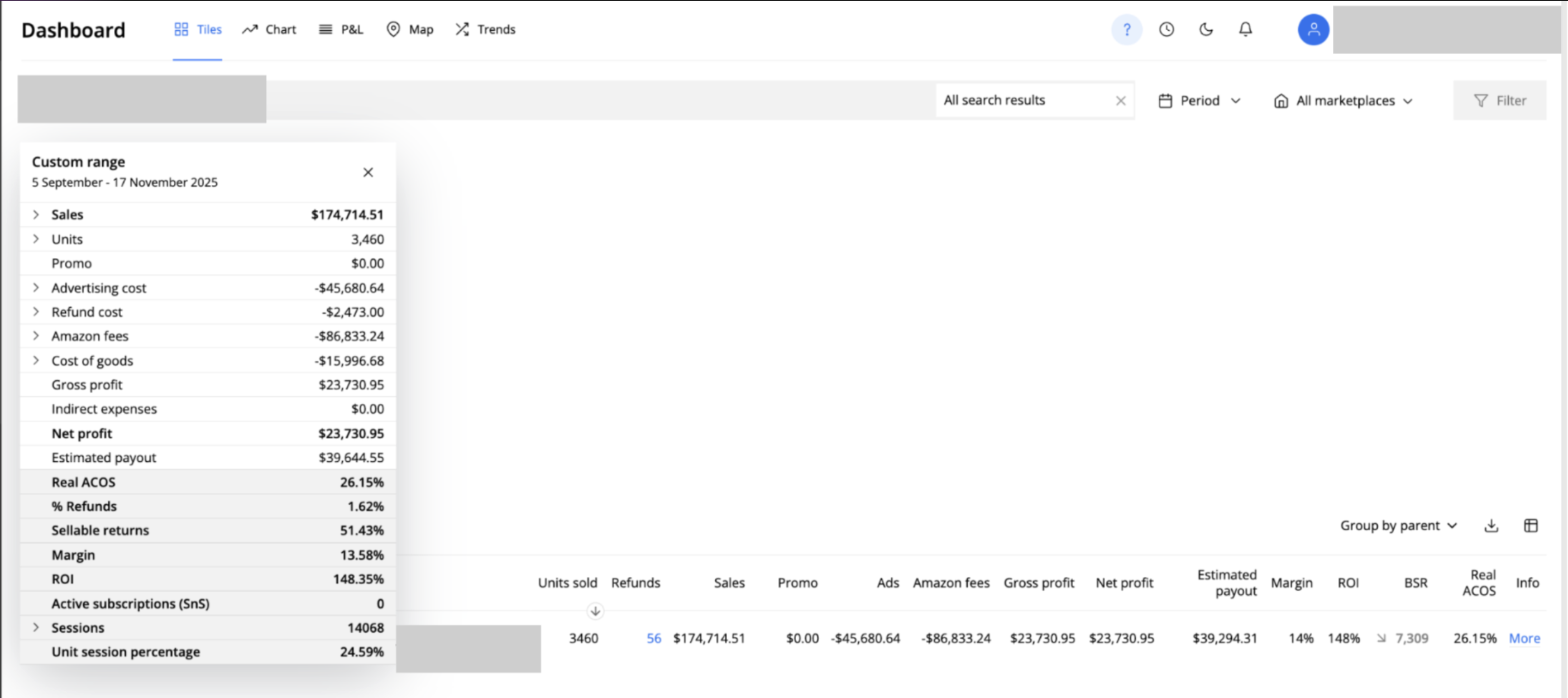
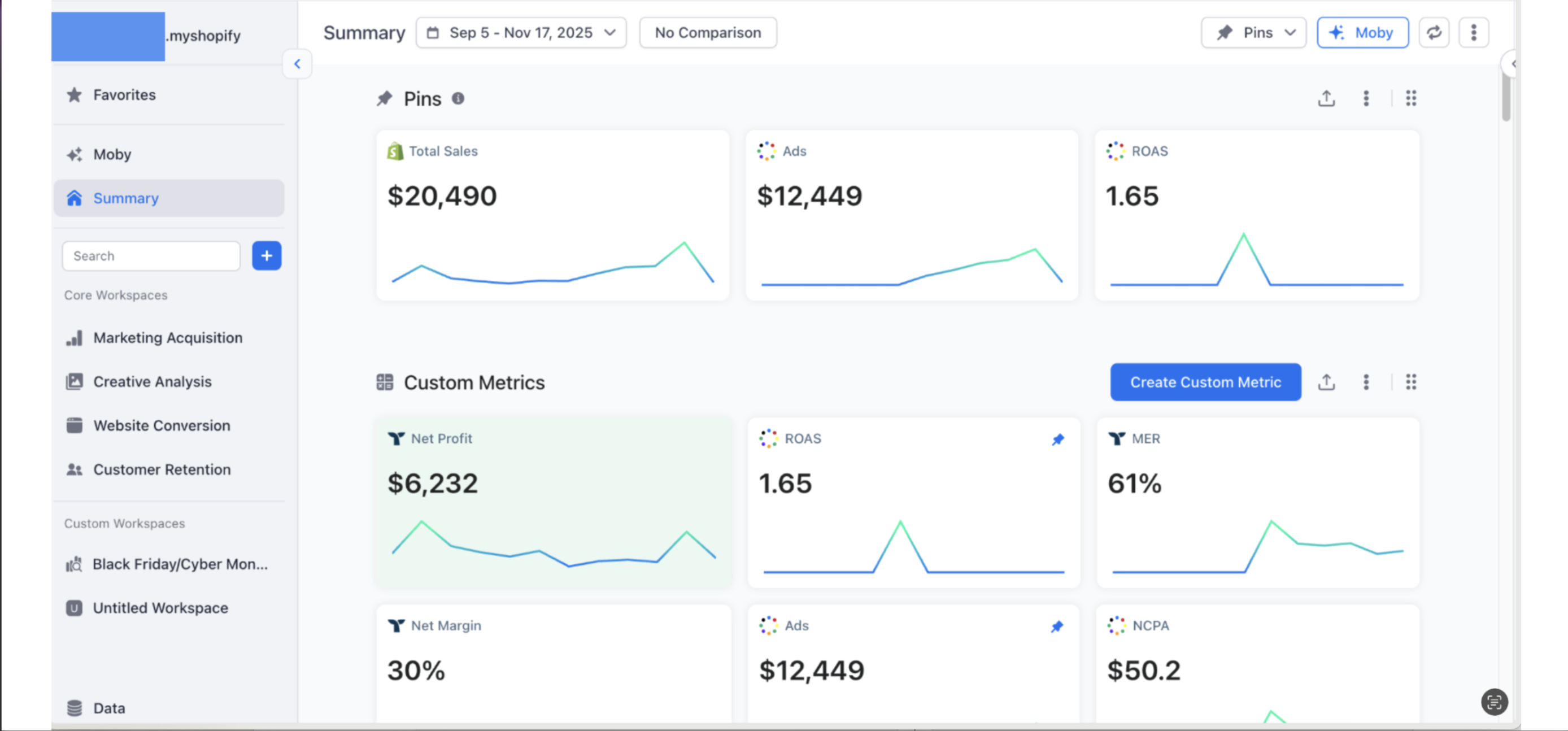
Here is the after screenshot from Triplewhale:
Ok, so what’s this strategy that produced a $75k profit swing? It’s called Spillover Commerce.
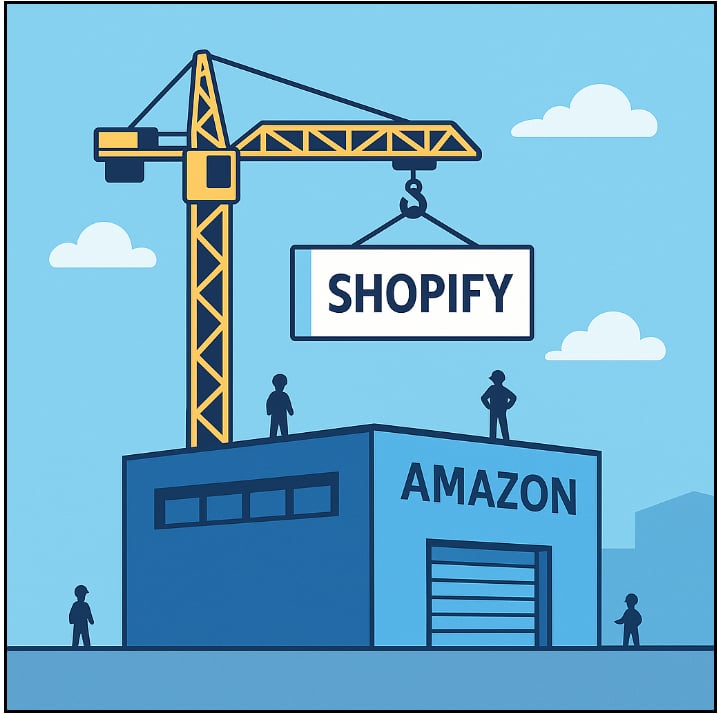
Spillover Commerce is pretty simple. Take an existing, profitable Amazon Business, and install a profitable
Shopify channel on it, and watch sales multiply.
Sounds simple right?
If you want to talk to us about how we can implement this for you, click here!
The Phases
Spillover Commerce is simple to describe, but hard to implement, unless you know the exact phases you need to implement them in.
Below are the phases that we have used to consistently and easily implement Spillover Commerce on Amazon businesses.
We are going to talk about how we implemented them for this specific brand, so you know what you need to be looking for.
Phase 0: Brand Evaluation
We went through our process to check that they had the right fit for this playbook to work
Amazon Product Market Fit – Check. They had this before we started
Meta-Market Fit – aka, do they have competitors successfully selling on Meta + Shopify? Yes, they did.
We typically check for Meta-Market Fit by investigating competitors on the Facebook Ads Library, like we are in this
screenshot, investigating Gruns.
Platform Specific Offers – Did they have the ability and deire to offer different products on different platforms?
Yes, they did. I think anyone would if they saw how profitable this can be.
So they passed Phase 0: Brand Evaluation with flying colors.
Want to see if your brand can get these results too? Fill out our 3 minute scorecard to find out instantly
Phase 0: Visual Asset Creation
They had SOME but not many creative assets.
They had product photos, and some videos, but not a lot.
This is common with Amazon brands.
This section really just came down to them being willing to get new creative assets. We helped them establish a
creative pipeline.
They made some deals with influencers.
Overall, they got to a minimum viable product.
Phase 0: Technical setup
They had everything they needed on Amazon, but they were really lacking on the Shopify side.
They didn’t really have any landing pages for their products.
We fixed this by just working with them to build something new.
We were still waiting for creatives anyways, so this was time well spent.
Phase 1: Meta Ads Testing
If you saw the results from Phase 1 of this project only, you’d think this was for sure a failed project, but that’s
exactly why it works.
Check out this screenshot from October 2025, where we were deep in Phase 1.
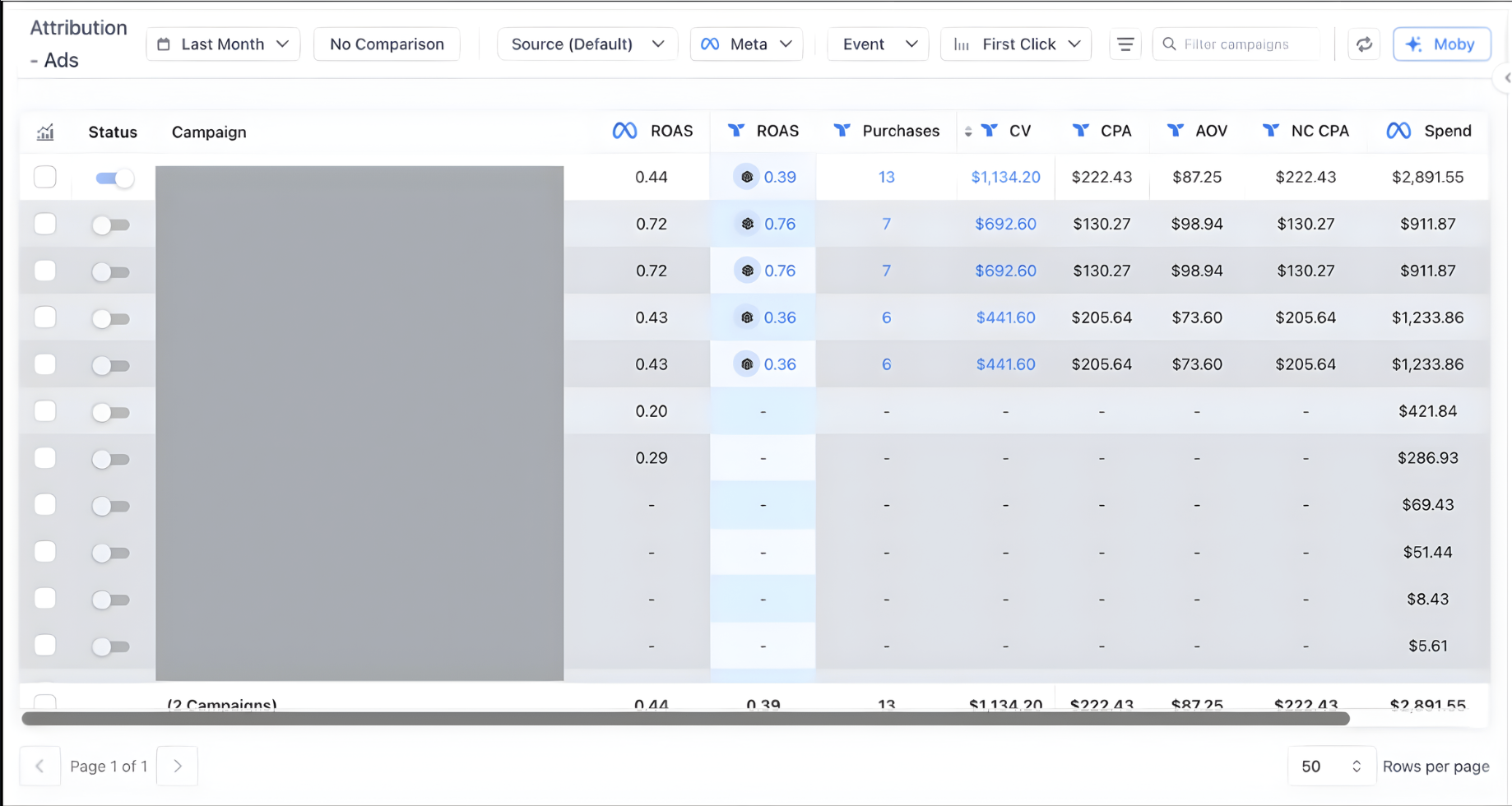
We needed to go in and test out all kinds of angles before you can get something profitable.
This client tried 20+ creatives before we found one that worked well.
How did we get out of Phase 1?
We had 1 niche angle hit, which then helped us understand that a large portion of the demographic buying these
products had grandchildren.
This led to us testing a bunch of new angles, which was the key “unlock” for this brand.
Phase 1 is messy. It’s the hardest part of this entire process, because it’s not systematic.
Luckily, we had our blueprint as well as some well established KPIs that we hit.
That’s how we got out of Phase 1 quickly.
Wondering if your products could get out of Phase 1? Fill out our 3-minute Spillover Commerce readiness scorecard to find out!
Phase 2 – Meta Growth and testing
This is where this account is right now. We are not quite “scaling” yet, because we still need more creative assets.
Here’s a screenshot from November 1 – 19, before BFCM Sales, and we had firmly entered Phase 2:
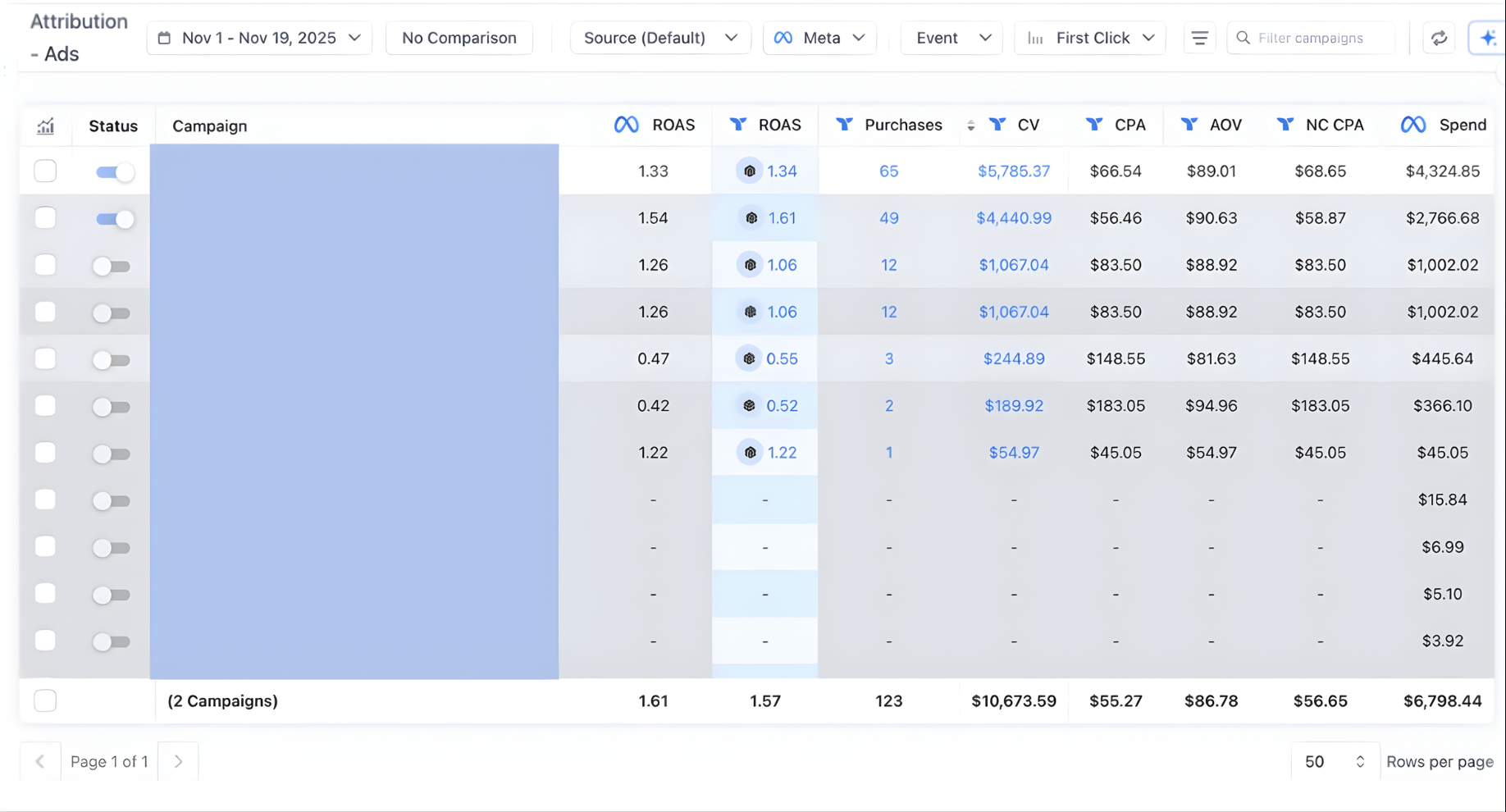
At this point, we are well into profitability.
We decided this phase started as soon as Meta Ads broke even. Right when we started breaking even from Meta
Ads, we saw the first impacts of the Amazon Spillover Effect.
Amazon Ads got cheaper. Ranking spiked. TACOS dropped dramatically from 54% to 26%.
Here’s a screenshot from November 1-19, 2025, the day before BFCM Sales started on Amazon, where we were
seeing the Amazon Spillover effect in full force:
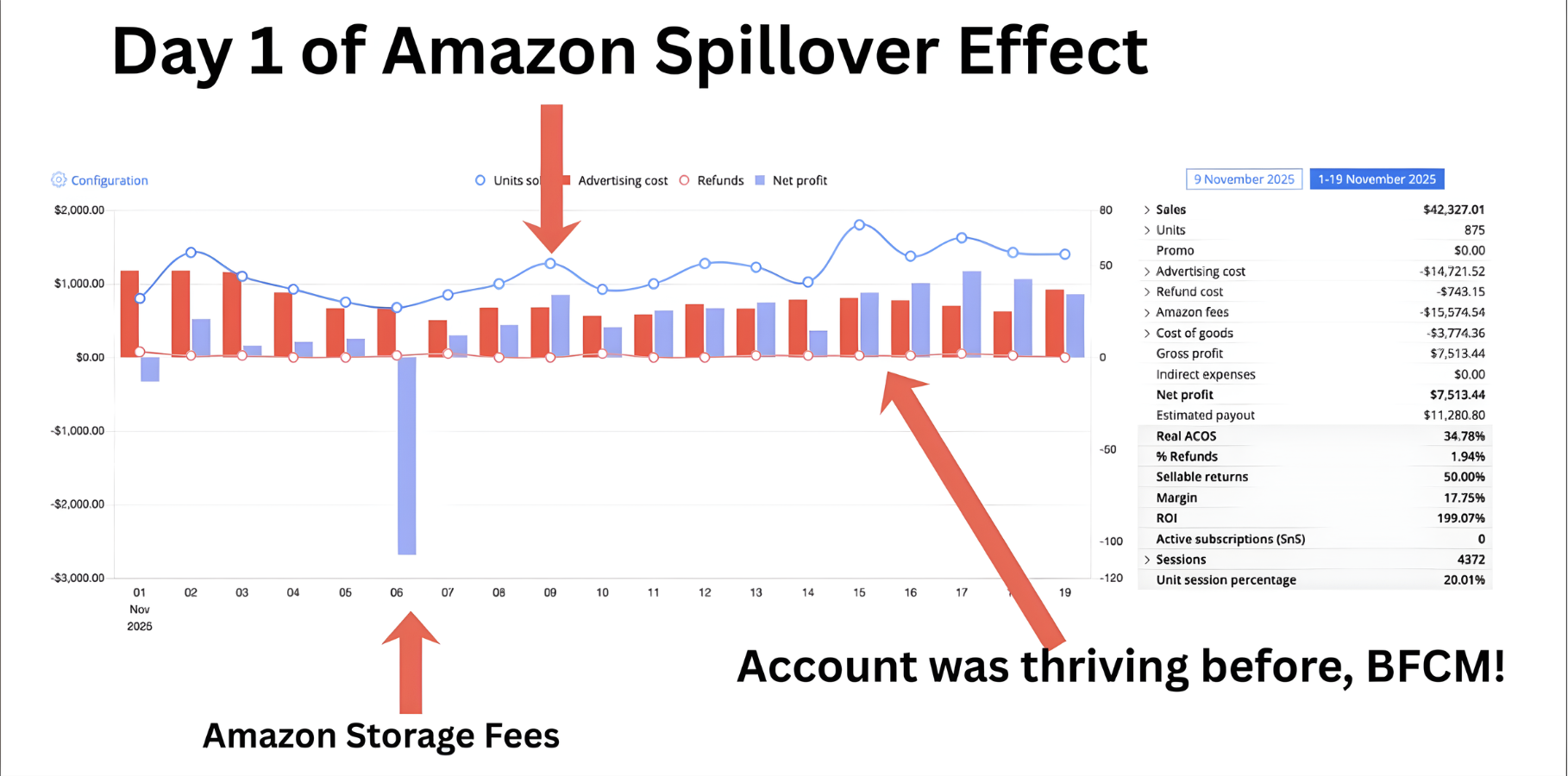
This is the exciting part, and we were lucky enough to get here BEFORE Black Friday.
This matters a lot because we could comfortably spend aggressively going into Black Friday and Cyber Monday.
If we hadn’t hit this in advance (we hit it about 4 weeks before BFCM), we would have had to spend dramatically
less than we did, to preserve margins.
This also meant that while our competitors on Amazon were cutting ad spend, because conversion rates were
down, we were gaining ground on our rankings.
It felt like we brought a gun to a knife fight.
Want to know if you can replicate these results? Take our Spillover Commerce readiness scorecard here
Where we go from here….
There are still at least a few phases left that haven’t been able to start as of today.
One of the next things we want to do is launch Meta Ads for the other top 3 products. This really involves
duplicating the things we did in the previous steps.
Another large opportunity focusing on dominating on Amazon, as the product we started with is still not in the top
10 for all its major keywords.
We could have already started on this effort, but we have been limited by inventory, here’s a screenshot from our
Sellerboard inventory dashboard.
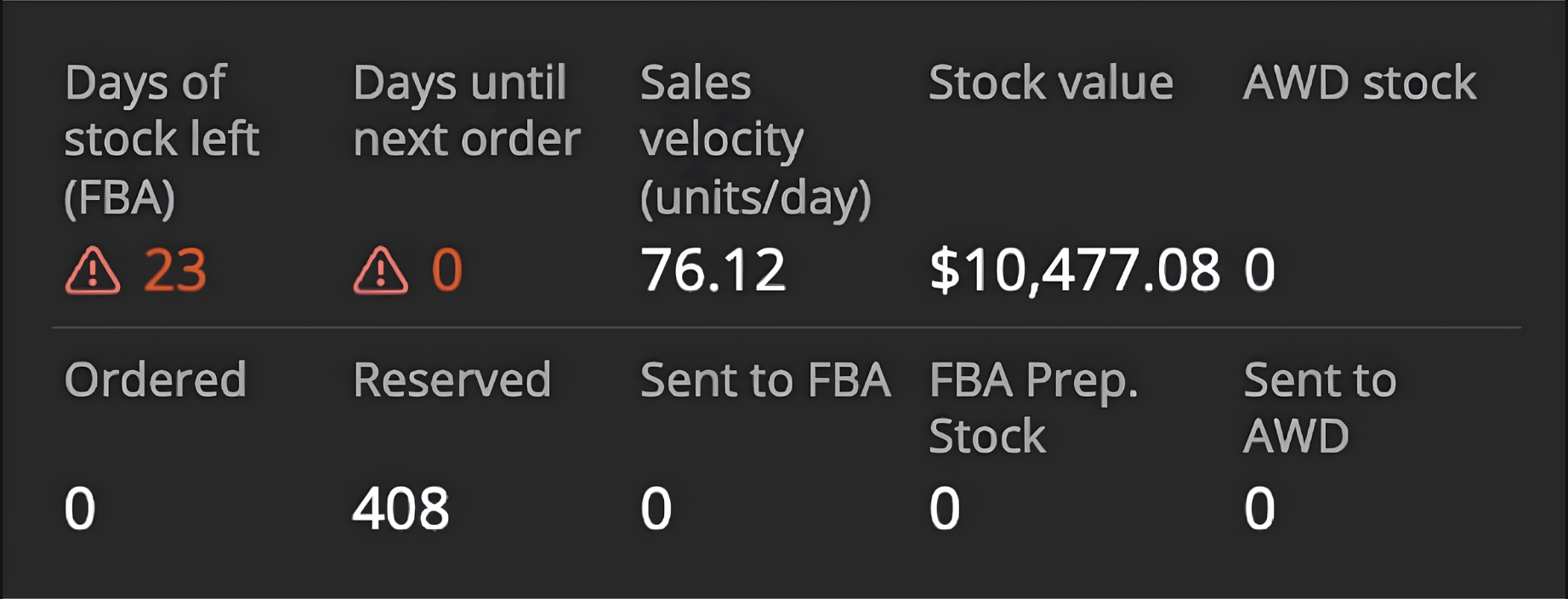
Finally, the last really large thing we want to do for this client is dominate on Meta.
This is a phase where suddenly it feels like “you’re everywhere” to your customers and prospective customers.
Dominating on Meta is also the most profitable phase, and so we are looking forward to tackling this next!
I’m just happy this client is no longer solely dependent on Amazon’s gravy train.
Now, even if their account gets shut down, they have a durable brand that can dominate on many different
platforms.
Want to talk to us about how we could implement the Spillover Commerce in your account? Contact us here